
When someone you care about is going through a hard time, it is natural to freeze. You want to help, but you are afraid of saying the wrong thing, so sometimes you say nothing at all. A job loss, a breakup, a health scare, a big move, the end of something they thought would last: hard seasons come in many shapes, and none of them come with a script.
The good news is that supporting a friend has very little to do with finding perfect words. It has much more to do with showing up, listening and staying. Here is what actually helps.
Show Up Before You Know What to Say
A simple message is enough to start: I heard what happened. I am thinking of you. No need to reply. That last line matters. It lets your friend feel cared for without adding one more thing to their to-do list.
Most people remember who reached out during their hardest seasons far more than what anyone said. Presence comes first. The words can catch up later.

Listen More Than You Fix
When someone we love is hurting, the instinct is to solve it. Have you tried this? You should talk to that person. Look on the bright side. Advice can be useful later, but in the middle of something hard, it often lands as pressure.
Try listening as if your only job is to understand. Ask open questions like, how are you really doing? and what has this week been like? Then let the silence sit for a moment. You may be surprised how much someone shares when they do not feel rushed toward a solution.
We wrote about why this works in You Don't Change Because of Advice. You Change Because You Feel Seen. Feeling seen is often the first thing that helps people move forward.
You do not have to fix it. You just have to make sure they are not carrying it alone.
Ask What Helps Instead of Guessing
Some people want to talk. Some want distraction. Some want company without conversation. The simplest way to know is to ask: Do you want to talk about it, or would it help more to do something normal together?
Their answer may change from day to day, and that is fine. Follow their lead.

Offer Specific Help
Let me know if you need anything is kind, but it puts the work back on the person who is struggling. Specific offers are much easier to accept.
- I am picking up groceries Thursday. What can I grab for you?
- Can I bring dinner over on Sunday?
- Want me to come with you to that appointment?
- I can take the kids for a few hours Saturday so you can rest.
Small, practical help often means more than big gestures.
What Not to Say
Most hurtful comments come from good intentions. A few to avoid:
- Everything happens for a reason
- At least it is not worse
- I know exactly how you feel
- You need to move on
- When that happened to me..., followed by your own long story
If you have been through something similar, a short, honest line can help: I went through something like this, and I remember how hard it was. Then turn the attention back to them.

Stay After the First Week
Support tends to pour in at the start and fade fast. The hardest days often come weeks or months later, when everyone else has moved on. Put a reminder in your calendar to check in again in two weeks, then a month, then on any difficult dates you know are coming. A quick still thinking of you can mean the world.
Know Your Limits and When to Point to Professional Help
Being a good friend does not mean becoming someone's therapist. If your friend seems stuck in deep hopelessness, stops functioning in daily life, or talks about not wanting to be here, gently encourage them to reach out to a doctor or licensed mental health professional, and offer to help them make the call.
If you believe they are in immediate danger, call 911. In the US, you or your friend can also call or text 988 any time to reach the Suicide and Crisis Lifeline, which also supports people who are worried about someone else.
Keep Including Them
People going through a hard time often stop getting invited to things. Friends assume they need space, or worry that an invitation will feel insensitive. The result can be a quiet kind of isolation right when connection matters most.
Keep asking. Invite them to the dinner, the walk, the game night, and make it easy to say no without guilt: No pressure at all, but we would love to see you if you feel up to it. Even when they decline, the invitation tells them they still belong. Over time, those small reminders help people find their way back to everyday life.

Take Care of Yourself, Too
Supporting someone through a hard time takes energy. It is okay to rest, to set boundaries, and to lean on your own people while you show up for theirs. You will be a steadier presence if you are not running on empty.
Many people discover that walking beside someone through a hard season is one of the most meaningful things they ever do. If that resonates, you might enjoy Why Become a Mentor, which looks at what giving that kind of support does for the giver.
The Gift of Not Walking Alone
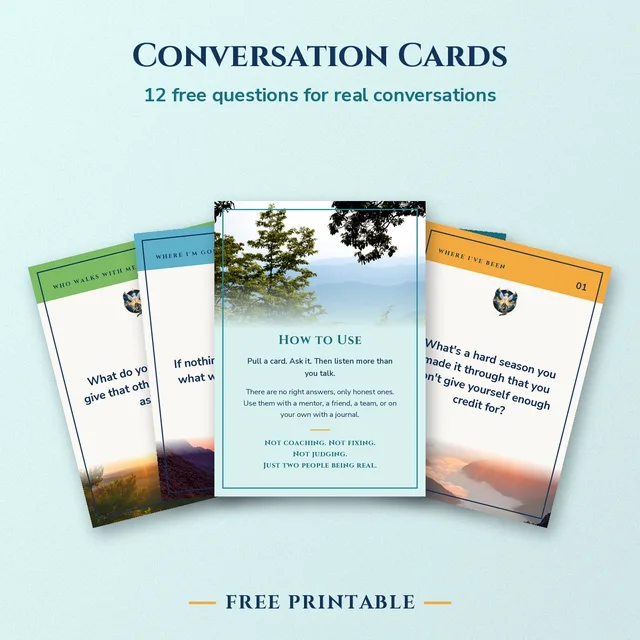
At Magical Journey Network, we believe no one should face the biggest changes of their life alone, and that ordinary people who simply show up can make an extraordinary difference. If you want more stories and ideas like these, grab the free Conversation Cards below. And if you are able, a gift to support the mission helps us connect more people with someone who has been there.
No one transforms alone.
You don't have to figure out the next move alone. Mentorship with MJN is one-to-one and always free.

Ania is COO and Head of Creative at Magical Journey Network, where she shapes the writing, the website, and the way MJN shows up in the world. A two-time bestselling author, she writes about mentorship, healing, career transitions, and what it takes to change direction without losing yourself.