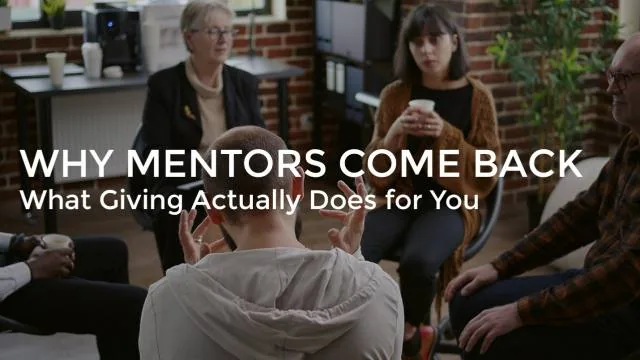
Most conversations about mentorship are written for the person being mentored. The struggling professional. The gig worker trying to figure out what's next. The person in recovery.
This one isn't.
This one is for the person on the other side of the table, the one who's been through something, figured some things out, and is sitting on knowledge that too many people never think to share.
Here's what the research actually shows about what mentorship does for the mentor.
You get sharper, not just warmer.
A 2017 study published in the Journal of Vocational Behavior found that mentors reported significant gains in job performance and career satisfaction, not because mentoring felt good, but because explaining what you know forces you to know it better. Psychologists call this the protégé effect: teaching consolidates your own expertise in ways that passive experience never does.
You think you know something until someone asks you to walk them through it.
Isolation is a bigger health risk than you think.
Surgeon General Vivek Murthy declared loneliness a public health epidemic in 2023, citing research that links social disconnection to outcomes comparable to smoking 15 cigarettes a day. That's not a metaphor. That's cardiovascular data.
The demographic most affected? Adults in mid-to-late career who've shed the built-in social structures of school and early work, and haven't replaced them with anything intentional.
Mentorship is intentional connection. It's a standing reason to show up, engage, and matter to someone specific. That's not a soft benefit. That's a measurable one.
Purpose isn't something you find. It's something you build.
The 40-year career model gave people a container for purpose: a role, a title, a company. That container is gone for most people now. Careers are shorter, more fragmented, and less linear than they've ever been.
What fills that gap? For a lot of the mentors we work with, it's the moment a person they've been walking alongside has a real breakthrough: gets the job, finishes the program, starts the thing they kept saying they'd start. You can't manufacture that. But you can put yourself in a position where it can happen.
What we're building.
Magical Journey Network isn't a coaching platform. We're not selling courses or certifications. We connect people who've lived through something with people who are in the middle of it, across four communities: professionals who feel mismatched or underused, gig workers building stability, experienced adults ready for a new chapter, and people on the road back from hard seasons.
Mentorship done well isn't selfless. It's mutual. The best mentors we've seen aren't doing it out of obligation. They're doing it because it's one of the few things that still makes them feel fully present. That's worth something, and you don't have to pretend otherwise.
You don't need to be an expert. You need to have been there. Mentorship with MJN is volunteer, one-to-one, and always free.
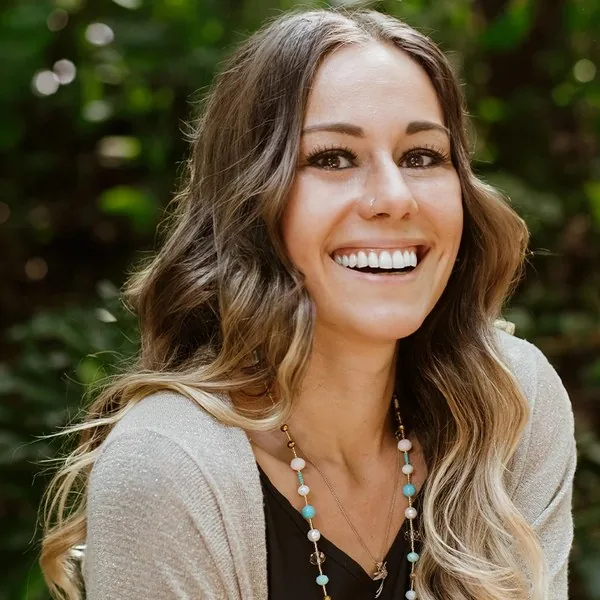
Ania is COO and Head of Creative at Magical Journey Network, where she shapes the writing, the website, and the way MJN shows up in the world. A two-time bestselling author, she writes about mentorship, healing, career transitions, and what it takes to change direction without losing yourself.