Somewhere around 50, a lot of people hit the same quiet wall. The work that once felt like a ladder now feels like a hallway. Maybe your industry changed under your feet. Maybe you were laid off. Maybe nothing went wrong at all, and you simply know you have one more meaningful chapter in you and this is not it.
And right behind that thought comes the fear: Isn't it too late? Won't I be starting from zero?
Here is the honest answer. A career change at 50 is not starting from zero. It is starting from fifty years of experience, and that changes everything about how you should approach it.
Why 50 Is a Better Starting Point Than It Feels
Younger career changers have energy and time. You have something harder to come by: judgment. You know how workplaces actually run. You know how to handle a difficult customer, a bad week, a missed deadline. You know what you are good at and, just as important, what drains you.
Employers in many fields say the skills they struggle to find are not technical. They are reliability, clear communication and steadiness under pressure, the very things decades of work build. We have seen this firsthand in fields like the skilled trades, where experience and follow-through often matter more than a degree.
You are not starting over. You are starting from everything you have already lived.
Step 1: Get Clear on What You Are Leaving
Before you chase something new, name exactly what is not working. Is it the work itself, the pace, the people, the commute, the feeling of being invisible? Many people at 50 leave an entire field when what they really needed to change was the role or the environment.
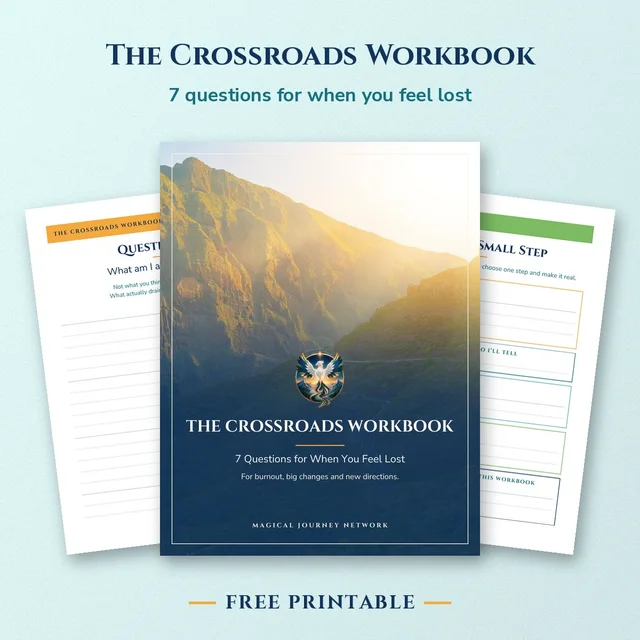
If you are not sure, our free Crossroads Workbook walks you through seven honest questions, starting with: What am I actually tired of?

Step 2: Inventory Your Transferable Strengths
Write down the things people come to you for. The problems you solve without thinking. The situations where you stay calm while others panic. These are the bridges into your next role.
- Managing people or projects translates into coordination, operations and team lead roles
- Customer-facing work translates into training, sales, advocacy and support
- Hands-on or technical work translates into teaching, inspection, estimating and consulting
- Caregiving and family leadership translate into patience, scheduling and crisis management

Step 3: Test Before You Leap
You do not need to quit on Monday to find out if something fits. Small experiments lower the risk and give you real information instead of guesses.
- Have three conversations with people already doing the work
- Take a short course or certification before committing to a longer one
- Volunteer or shadow for a day
- Try a part-time or project-based version of the work first
If you find yourself pulled in ten directions at once, read Too Many Career Options? You're Distracted, Not Lost. More options are not always more clarity.

Step 4: Plan the Money Honestly
A career change at 50 often means a dip before a rise. Look plainly at your savings, your fixed costs and how long you could manage on less. A clear number turns a scary unknown into a plan. If you can, talk with a financial professional before making a big move, especially if retirement accounts are involved.
Step 5: Expect the Inner Critic
Somewhere in the process, a voice will tell you that you are too old, too late, too far behind. That voice is common, and it is usually wrong. The people who make successful changes at this age are rarely the most fearless. They are the ones who kept going while the voice talked.
Step 6: Tell Your Story Well
When you start talking with employers or clients, how you describe your change matters. Skip the apology for your age or your past field. Instead, connect the dots for them: here is what I did, here is what I learned, and here is why it makes me good at this new work.
A simple three-part story works well. What you did before, in one sentence. What you discovered you love or do best, in one sentence. Why this new role is the natural next step, in one sentence. Practice it out loud until it feels true, because it is.
- Lead with results you achieved, not years you served
- Use the language of the new field, not the old one
- Show recent learning, like a course, certificate or project
- Let your steadiness show. Calm confidence is one of your biggest advantages

Step 7: Do Not Do It Alone
Career changes are lonelier than they need to be. Friends may not understand why you would leave something stable. Family may worry. That is exactly when it helps to talk with someone who has made a similar leap and can tell you what it was really like.
That is what peer mentorship is for: a real person a few steps ahead of you, who remembers the fear and can help you think it through. If you are curious how it differs from coaching, What Is Peer Mentorship? explains it in plain terms.
What People Who Made the Change Often Say
People who change careers later in life tend to say the same few things looking back. The fear was bigger than the risk. The first six months were the hardest. And the work they found fit them in a way their old career never quite did, because this time they chose it with their eyes open.
Your Next Chapter Is Allowed to Be Your Best One
Fifty is not the end of your working story. For many people, it is where the work finally starts to fit. Take one honest look at what you want, one small step toward it, and let the rest unfold from there.
If you are standing at that crossroads right now, grab the free Crossroads Workbook below. And if this helped, a gift to support the mission keeps peer mentorship free for the next person standing where you are.
No one transforms alone.
You don't have to figure out the next move alone. Mentorship with MJN is one-to-one and always free.

Ania is COO and Head of Creative at Magical Journey Network, where she shapes the writing, the website, and the way MJN shows up in the world. A two-time bestselling author, she writes about mentorship, healing, career transitions, and what it takes to change direction without losing yourself.