

Some days the thought arrives quietly. Other days it shows up loud, right after a tough meeting: I should just quit.
Sometimes quitting is exactly the right move. Sometimes it is a reaction to a hard season that will pass. These seven questions can help you tell the difference and make a decision you will feel good about later.
1. Is It the Job, the Boss, or the Whole Career?
A difficult manager, a toxic team or a bad schedule can make any job miserable. Those problems can sometimes be fixed with a transfer or a new company in the same field. If you dread the work itself, no matter where you do it, that points to a bigger change.
2. How Long Have You Felt This Way?
A rough month during a big project is different from a year of Sunday-night dread. If the feeling has lasted through several seasons and good weeks are rare, take it seriously.

3. Is It Affecting Your Health or Relationships?
Trouble sleeping, constant exhaustion, snapping at people you love, or feeling numb are signs that something needs to change. If you think you might be burned out, our guide to career burnout can help you figure out what you need first.
4. Have You Tried to Fix It?
Before you leave, consider whether an honest conversation could change things: a different role, flexible hours, a raise or new responsibilities. Sometimes a job improves once you ask. If you have asked and nothing changed, that is useful information too.
Quitting is not failure. Staying stuck is not loyalty. The goal is to choose on purpose.
5. What Are You Moving Toward?
Leaving is easier to plan when you know what you want next. You do not need a perfect answer, but a direction helps: a field to explore, a skill to build, a kind of work environment that fits you better.

6. Can You Afford a Gap?
- How many months of expenses can you cover if you leave before having a new job?
- Do you rely on your employer for health insurance?
- Could you start job searching while still employed, which is usually easier?
If money is tight, plan the switch instead of making the leap. Search on evenings and weekends, and give yourself a target date.
7. What Would You Tell a Friend?
Imagine a close friend describing your exact situation. What would you say to them? We are often wiser and kinder about other people's lives than our own.
Make a Simple Pros and Cons List
Once you have worked through the seven questions, write two columns: reasons to stay and reasons to go. Then give each reason a score from 1 to 5 based on how much it really matters to you. Sometimes one big reason outweighs five small ones. Seeing it on paper can make a foggy decision feel clearer.
Then talk it through with someone you trust, ideally someone who has made a similar choice. Saying it out loud often reveals what you already know.
If You Decide to Stay for Now
Staying can be a smart choice while you plan. Make it intentional: set a date to reassess, start building skills or savings, and protect your energy outside of work.
If You Decide to Go
- Give proper notice and leave on good terms. Your references matter.
- Update your resume and reach out to your network before you announce it.
- Take a little time to rest if you can. Starting fresh works better when you are not running on empty.

Signs It Is Time to Go
- You have raised the problems and nothing changed.
- You feel worse about yourself because of how you are treated.
- You have stopped learning and see no path to grow.
- The job is hurting your health, sleep or relationships.
- You feel relief every time you imagine leaving.
If several of these ring true, it may be time to start planning your exit, even if you do not leave tomorrow.
Common Questions
- Is it okay to quit a job without another one lined up? It can be, if you have savings and a plan. Most people find it less stressful to search while employed.
- How do I know if I am just burned out? If rest helps and the feeling fades, it may be burnout. If it comes right back, the fit may be the problem.
- Should I quit if I hate my job? Hating your job is a strong signal. Use these questions to plan an exit that sets you up well.
If a bigger change is calling, read our guide to changing careers at 30, or try our 30-minute exercise for figuring out what to do next.
Magical Journey Network, Inc. is a nonprofit. If this post helped, you can support our work.
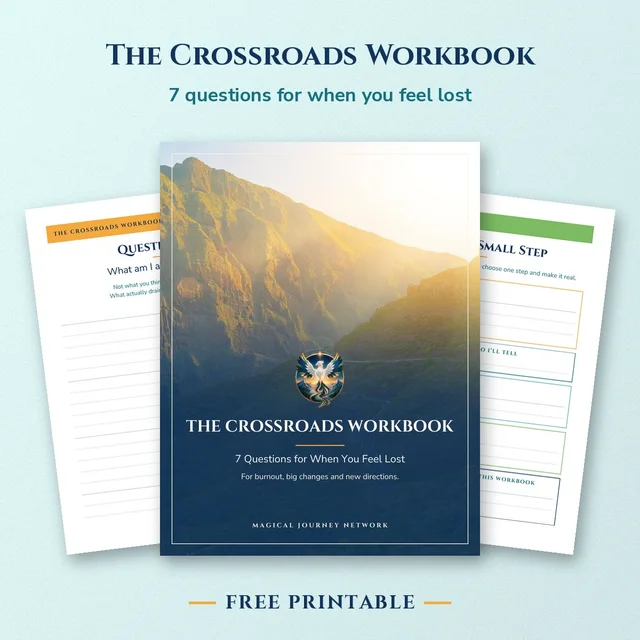
Grab the free Crossroads Workbook below. It walks you through seven honest questions so you can decide your next step with a clear head.
No one transforms alone.

Get The Crossroads Workbook free, and join the network for honest stories and simple tools for life's big changes.

Ania is COO and Head of Creative at Magical Journey Network, where she shapes the writing, the website, and the way MJN shows up in the world. A two-time bestselling author, she writes about mentorship, growth, career transitions, and what it takes to change direction without losing yourself.