

You used to care about this work. Maybe you still do, somewhere underneath. But lately the alarm feels heavier, Sunday nights come with a knot in your stomach, and the tasks that once felt meaningful now feel like a list you are dragging yourself through.
If that sounds familiar, you may be dealing with burnout. And if you have started to wonder whether the problem is you, here is the honest answer: it usually is not. Burnout often shows up when the work and the person have quietly grown apart.
The good news is that burnout is a signal, not a verdict. Read it carefully and it can point you toward what needs to change.
What Burnout Actually Looks Like
Burnout is more than being tired. Rest helps tiredness. Burnout tends to stay even after a weekend off. Common signs include:
- Exhaustion that sleep does not fix
- Feeling cynical or detached from work you used to care about
- Getting less done no matter how hard you push
- Dreading the start of the week
- Irritability that spills into your home life
Burnout can overlap with depression, anxiety and physical health issues. If you are struggling to get through the day or feel hopeless, please talk with a doctor or licensed mental health professional. In the US, you can call or text 988 any time to reach the Suicide and Crisis Lifeline.

Is It the Job, or the Career?
This is the most important question to answer before making any big move. Burnout from a bad situation and burnout from a career that no longer fits feel similar, but they call for very different responses.
Signs it may be the situation
- The work itself still interests you on good days
- A specific manager, team or workload is the main source of stress
- You can picture enjoying the same role somewhere else
Signs it may be the career
- Even your best days feel empty
- You feel relief when you imagine never doing this work again
- You keep daydreaming about a completely different path
- Your values and the work have drifted apart
If it is the situation, a change of role, team or employer may be enough. If it is the career, it may be time to look further.
Burnout is not proof you are weak. It is proof you have been carrying too much for too long.
Start With Recovery, Not a Resignation Letter
When you are deeply burned out, every option looks bad, and big decisions made from exhaustion often lead to more of the same. Before you decide anything major, try to get a little breathing room.
- Take the time off you are owed, and protect it
- Trim one commitment that drains you more than it gives
- Get back to basics: sleep, movement, real meals and time outside
- Tell one trusted person how you are actually doing
We wrote about why stepping back can be the strongest move in Why Slowing Down Is Actually a Power Move.

Get Honest About What You Need
Once you have a little energy back, look clearly at what is missing. Is it autonomy, meaning, fair pay, a sane schedule, people you respect, work that uses your strengths? Write it down. The clearer your list, the easier it becomes to spot the right next step and to avoid jumping into another version of the same problem.
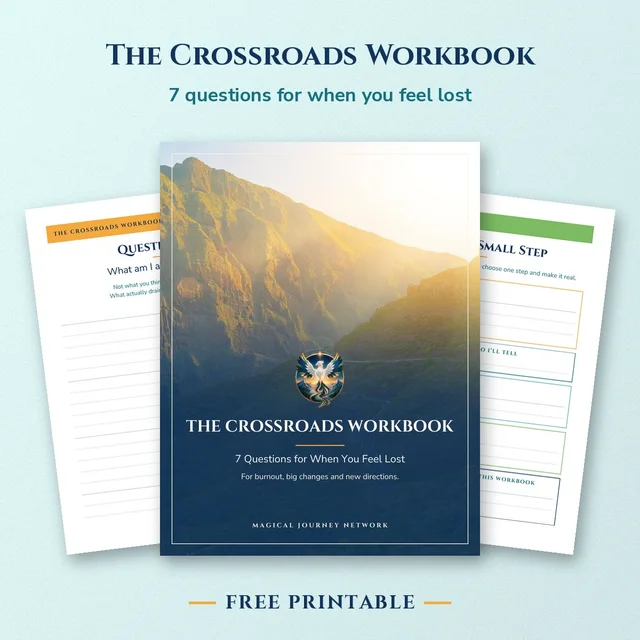
Our free Crossroads Workbook walks you through seven honest questions for exactly this moment, starting with: What am I actually tired of?
Explore Before You Leap
If you suspect the career itself no longer fits, test the waters before you quit. Talk with people doing work that interests you. Take a short course. Try a side project or volunteer role. Small experiments give you real information instead of fantasies, and they rebuild a sense of possibility that burnout tends to steal.
If too many directions feel tempting at once, read Too Many Career Options? You're Distracted, Not Lost.

You Do Not Have to Figure It Out Alone
Burnout is isolating. It drains the energy you would normally use to reach out, and it can make you feel like everyone else is coping fine. They are not. Talking with someone who has been through burnout and found their way to work that fits can make the path feel real and walkable.
That is the heart of peer mentorship: a real person a few steps ahead of you, who remembers what this felt like. Read What Is Peer Mentorship? to learn more.
Talking to Your Employer
If you think the job could work with changes, consider an honest conversation with your manager or HR. Come with specifics: the workload you can sustain, the tasks that drain you most, the flexibility that would help. Many employers would rather adjust a role than lose an experienced person. If that conversation goes nowhere, that tells you something useful too.
Keep a written record of what you ask for and what you hear back. It helps you stay clear about whether things are actually changing.

Burnout Can Be a Beginning
Many people look back on their burnout as the moment they finally stopped ignoring what they needed. It is painful, and it is also information. Rest first. Get honest. Take one small step. The work that fits you is still out there.
If you are ready to start untangling what comes next, grab the free Crossroads Workbook below. And if this helped, a gift to support the mission keeps peer mentorship free for the next person standing where you are.
No one transforms alone.
You don't have to figure out the next move alone. Mentorship with MJN is one-to-one and always free.

Ania is COO and Head of Creative at Magical Journey Network, where she shapes the writing, the website, and the way MJN shows up in the world. A two-time bestselling author, she writes about mentorship, healing, career transitions, and what it takes to change direction without losing yourself.