
You did what you were told. You studied, you graduated, you applied. And then you heard nothing, or you heard "we went with another candidate" for the twentieth time.
If that is where you are, take a breath. The entry-level market is tough right now, and a slow start says very little about where you will end up. Here is what is going on and what actually helps.
Why It Feels So Hard Right Now
- Many entry-level postings ask for experience that new grads do not have yet.
- Online applications get hundreds of responses, so many are filtered out before a person ever sees them.
- Some companies have slowed hiring for junior roles.
- Social media makes it look like everyone else landed a dream job on day one. They did not.
A slow start is not a verdict on your future. It is a season, and seasons change.

The numbers back this up. Entry-level job listings have dropped by about 35% since 2023, according to Revelio Labs, and recent grads face higher unemployment than workers overall. If your search is taking longer than you expected, the market is a big part of the reason.
Step 1: Apply Smarter, Not Just More
Sending 200 identical applications is exhausting and rarely works. Pick 10 to 15 roles that truly fit, tailor your resume to each one, and use the words from the job posting. Quality beats volume.
Step 2: Talk to People
Most jobs are filled through someone who knows someone. That can feel unfair, but you can build those connections starting today.
- Reach out to alumni from your school who work where you want to work.
- Ask for 15 minutes to learn about their path, not for a job.
- Tell friends, family and former professors what kind of role you are looking for.
- Go to local meetups and industry events, even if it feels awkward at first.

What to Say When You Reach Out
Reaching out to strangers feels awkward, so keep it short and specific. Here is a simple message you can adapt:
Hi Sam, I am a recent graduate from State, and I am interested in marketing roles like yours. Would you have 15 minutes in the next few weeks to share how you got started? I would really appreciate it.
Most people remember how hard their own first search was. Many will say yes, and a few of those conversations can turn into referrals.
Step 3: Fill the Gap With Real Experience
If you are not working yet, you can still build skills and stories that hiring managers care about.
- Take on a short freelance or volunteer project in your field.
- Earn a certificate in a tool or skill that shows up in job postings.
- Build a small portfolio, a writing sample, or a project you can show.
- Consider a part-time or temp job. Any job builds references and confidence.
Step 4: Widen the Net
Your degree does not lock you into one path. Look at related roles, smaller companies, nonprofits, and fields you had not considered. Many people find their real career through a side door.
If you are unsure which direction to go, our guide to having too many career options can help you narrow it down.
Step 5: Protect Your Confidence
Rejection hurts, especially when it piles up. Set a weekly goal, take breaks, keep moving your body, and stay connected to friends. Your worth is not your inbox.

Keep a Simple Weekly Plan
- Monday: find five roles worth applying to.
- Tuesday and Wednesday: tailor and send applications.
- Thursday: reach out to two people for short conversations.
- Friday: work on a skill or portfolio piece.
- Weekend: rest and see friends.
A plan turns an endless, shapeless search into steps you can finish. That alone can make the waiting easier.
Common Questions
- How long does it take to find a job after college? It varies a lot. Many grads take several months, and that is normal.
- Should I take a job outside my field? It can be a smart bridge. You will build skills and contacts while you keep looking.
- Is it bad to have a gap on my resume? Not if you can show what you did with the time: learning, volunteering, projects or part-time work.
If this season has you questioning everything, read our post on the quarter-life crisis, or try our 30-minute exercise for figuring out what to do next.
Magical Journey Network, Inc. is a nonprofit. If this post helped, you can support our work.
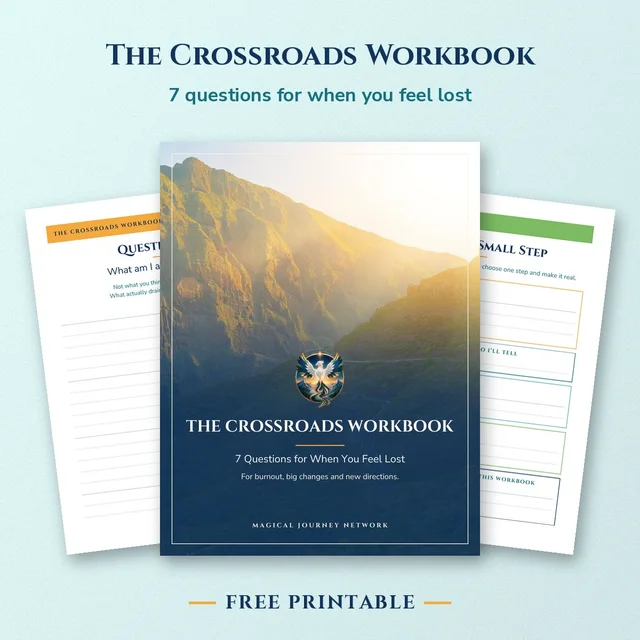
Grab the free Crossroads Workbook below. It helps you get clear on what you want and plan your next honest step.
No one transforms alone.

Get The Crossroads Workbook free, and join the network for honest stories and simple tools for life's big changes.

Ania is COO and Head of Creative at Magical Journey Network, where she shapes the writing, the website, and the way MJN shows up in the world. A two-time bestselling author, she writes about mentorship, growth, career transitions, and what it takes to change direction without losing yourself.