
Maybe you picked your major at 18. Maybe you took the first job that called back. Now you are in your 30s, good at work you do not love, and wondering if it is too late to change direction.
It is not. People change careers in their 30s all the time, and many say it was the best decision they made. The key is to do it with a plan, not a leap.
Why Your 30s Are a Great Time to Switch
- You know yourself better. You have real data on what energizes and drains you.
- You have transferable skills: communication, problem-solving, managing people and projects.
- You likely have decades of work ahead. A change now has plenty of time to pay off.
- You have a network, even if it does not feel like one yet.
You are not starting over. You are starting from experience.

Common Fears, Honestly Answered
- "I will be starting at the bottom." Often not. Many career changers start a level or two in, thanks to skills they already have.
- "I wasted my 20s." You built experience, discipline and self-knowledge. None of that is wasted.
- "Everyone will be younger than me." Maybe, and you will bring perspective they do not have yet.
- "What if I fail?" Testing the new field first, with small experiments, keeps the risk low.
Step 1: Get Clear on Why You Want to Change
Is it the work itself, the company, the boss, the pay or the hours? Sometimes a new job in the same field fixes the problem. Sometimes the whole field is wrong. Knowing which saves you from changing too much or too little.
Step 2: Map Your Transferable Skills
List what you do well, then translate it. A teacher plans, presents and manages a room. A server reads people and handles pressure. A retail manager runs schedules, budgets and teams. Those skills travel.
Step 3: Explore Before You Commit
- Talk to three people who do the work you are considering. Ask what they wish they had known.
- Shadow someone for a day or volunteer in the field.
- Take a short course before signing up for a long one.
- Try a side project or freelance gig to test the work for real.
If you are weighing a hands-on path, read our guide to switching careers to the trades, where demand is strong and training often comes with a paycheck.

Step 4: Plan the Money
A career change can mean a pay dip at first. Plan for it:
- Build a cushion of a few months of expenses if you can.
- Look for paid training, apprenticeships or employer-sponsored programs.
- Consider a gradual switch: part-time study or side work while you keep your current job.
One of the best ways to plan the money side is to talk with someone who made a similar switch. Ask how long it took to get back to their old salary, what they wish they had saved, and which costs surprised them. Real numbers from a real person beat guesses.
Step 5: Tell a New Story
Update your resume and LinkedIn to lead with the skills that matter in your new field, not your old job titles. Practice a short answer to "Why the change?" that is honest and forward-looking: what you learned, what you want to build, and why this field fits.
Step 6: Take One Step This Week
Big changes are built from small moves. Send one message, sign up for one info session, or block one hour to research. Momentum matters more than a perfect plan.

What a Career Change Can Look Like
Picture someone who spent eight years in retail management. They loved training new staff but were worn out by nights and weekends. They took a short course in instructional design, built two sample training modules, and talked to five people in corporate training. Within a year, they moved into a learning and development role, using the people skills they had built on the shop floor every day.
That is how most career changes work. Not one giant leap, but a series of small, smart steps built on what you already know.
Common Questions
- Is 30 too old to change careers? No. Many people change careers several times, and your 30s give you a long runway.
- Do I need to go back to school? Not always. Many fields hire based on skills, certificates or apprenticeships.
- How do I explain a career change in interviews? Focus on what carries over and why the new work fits who you are now.
If you are not sure yet which direction to go, try our 30-minute exercise for figuring out what to do with your life.
Magical Journey Network, Inc. is a nonprofit. If this post helped, you can support our work.
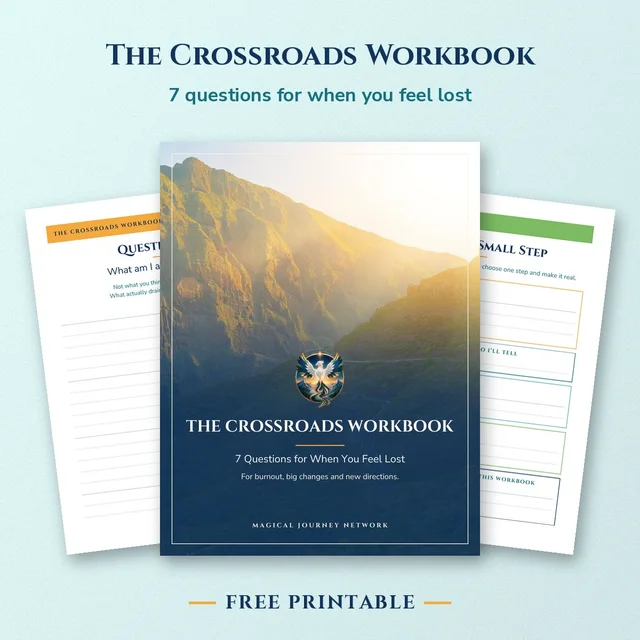
Grab the free Crossroads Workbook below. It helps you get clear on what you are leaving, what you want, and your next honest step.
No one transforms alone.

Get The Crossroads Workbook free, and join the network for honest stories and simple tools for life's big changes.

Ania is COO and Head of Creative at Magical Journey Network, where she shapes the writing, the website, and the way MJN shows up in the world. A two-time bestselling author, she writes about mentorship, growth, career transitions, and what it takes to change direction without losing yourself.