

Ask a man how he is doing and you will usually hear some version of the same answer: Good. Busy. Can't complain. Then the conversation moves on to work, sports or the weather.
Underneath that answer, a lot of men are carrying something they rarely say out loud. They have coworkers, family and people they know, but nobody they really talk to. A 2021 survey by the Survey Center on American Life found that 15 percent of men said they had no close friends at all, up from 3 percent in 1990.
Loneliness among men is common, and it is rarely talked about. Here is why it happens, and what actually helps.

Why Men Drift Into Isolation
Most men do not decide to become isolated. It happens slowly, one missed invitation at a time.
- Friendship often grows from shared activity, like school, sports or early jobs, and those settings fade with age
- Work and family responsibilities quietly crowd out time with friends
- Many men were taught to handle problems alone and keep hard feelings to themselves
- Moves, divorces and job changes can wipe out a social circle almost overnight
- Reaching out first can feel awkward or even risky
None of this is a personal failure. It is a pattern, and patterns can be changed.
Strength is not carrying everything alone. Strength is letting someone help carry it.
What Loneliness Can Look Like
Loneliness in men does not always look like sadness. It can show up as irritability, working all the time, too much screen time, restlessness or simply feeling flat. Many men do not name it as loneliness at all. They just know something is missing.
What Actually Helps

Do Things Side by Side
Many men connect best shoulder to shoulder rather than face to face. Fishing, fixing something, a pickup game, a long drive, a hike. Shared activity takes the pressure off and makes real conversation more likely to happen naturally.
Make It Regular
Friendship grows through repetition. A standing weekly coffee, a monthly poker night or a Saturday morning walk does more than an occasional big plan. Put it on the calendar so it does not depend on anyone remembering to reach out.
Go One Question Deeper
You do not need to pour your heart out to build closeness. Try going one question past the usual small talk. Instead of how is work, ask what has been the hardest part of this year? Then listen. Most men are relieved when someone opens that door first.
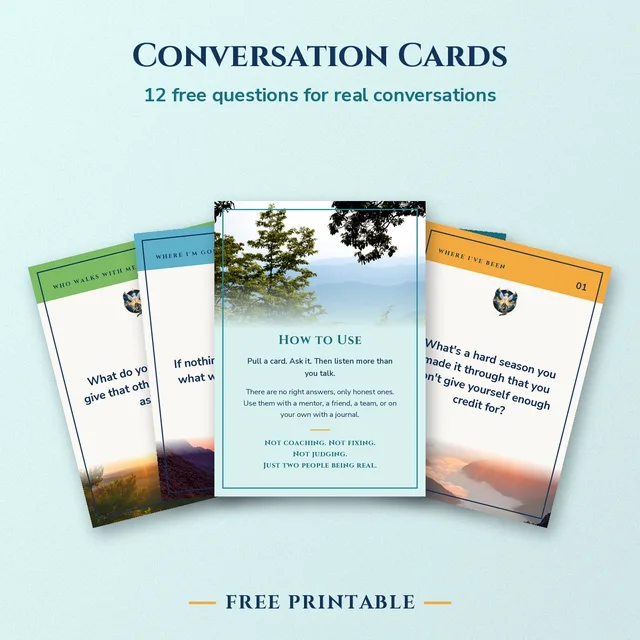
If you want a little help getting started, conversation cards can make it easier to ask the questions that matter without it feeling forced.
Reach Out First
Someone has to send the first text. Let it be you. A simple been thinking about you, want to grab lunch? can restart a friendship that has gone quiet for years. Most people are glad to hear from you, even if they did not reach out themselves.
Talk With Someone Who Has Been There
Sometimes it helps to talk with a man who has walked through a similar season, a career change, a divorce, a move, a loss, and found his footing again. That is the heart of peer mentorship: real conversation with someone a few steps ahead, no lecture and no judgment.
We wrote about why that kind of support works in You Don't Change Because of Advice. You Change Because You Feel Seen.
Rebuilding Friendship After 40
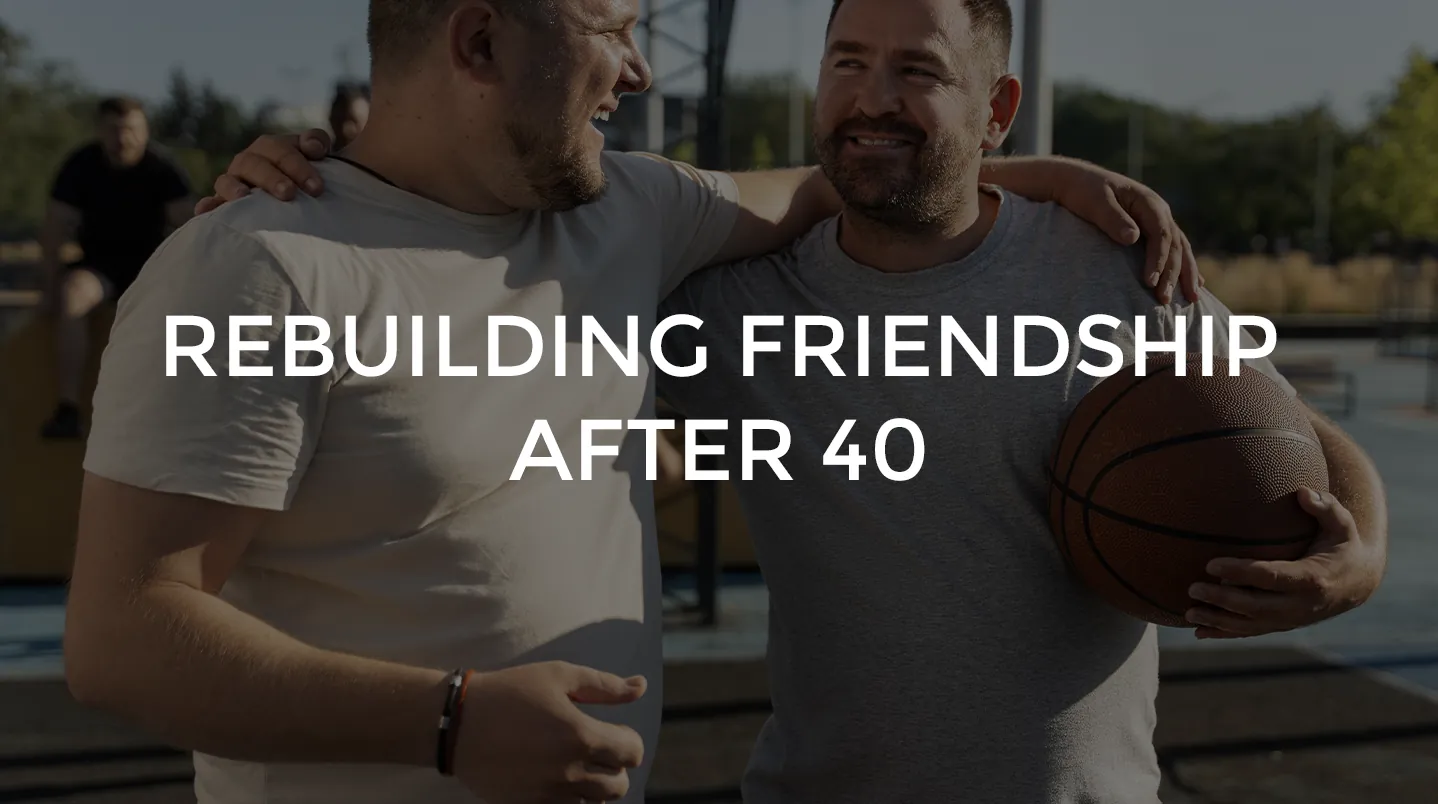
Making friends as an adult can feel strange at first, especially if it has been years. It helps to remember that most men are in the same position and quietly hoping someone will reach out. Look for places where the same people show up again and again: a gym class, a volunteer crew, a club, a weekly game. Familiar faces turn into friends through simple repetition.
Be patient with the process. A University of Kansas study found it takes roughly 50 hours together to go from acquaintance to casual friend, and over 200 hours to become close friends. Every coffee, game and conversation counts toward that.

If You Are Worried About a Man in Your Life
Maybe you are reading this for your dad, your partner, your brother or a friend. You do not need to have a big talk to help. Invite him to do something specific. Ask about his week and mean it. Mention you have been thinking about him. Small, steady contact tells him he matters, and that is often what opens the door.
For more ideas, read How to Support a Friend Going Through a Hard Time.
Why This Matters More Than It Seems
Connection is not a luxury. A large review of 148 studies found that people with stronger social relationships had a significantly better chance of survival over time. Taking time for friendship is not time away from what matters. It is part of what keeps you well enough to show up for everything else.
When It Is More Than Loneliness
If you have been feeling hopeless, numb or unable to enjoy anything for weeks, or if you are having thoughts of harming yourself, please reach out to a doctor or licensed mental health professional. In the US, you can call or text 988 any time to reach the Suicide and Crisis Lifeline. Asking for help is a sign of strength, not weakness.
You Are Not the Only One
If you have read this far and recognized yourself, you are in very good company. Many of the men around you feel the same way and are waiting for someone else to go first. Send the text. Make the plan. Ask the deeper question. Connection is built one small step at a time, and it is never too late to start.
Read The Quiet Crisis of Walking Alone for more on why connection matters so much.
If you want an easy way to start better conversations, grab the free Conversation Cards below. And if this helped, a gift to support the mission keeps peer mentorship free for the next person standing where you are.
No one transforms alone.
You don't have to figure out the next move alone. Mentorship with MJN is one-to-one and always free.

Ania is COO and Head of Creative at Magical Journey Network, where she shapes the writing, the website, and the way MJN shows up in the world. A two-time bestselling author, she writes about mentorship, healing, career transitions, and what it takes to change direction without losing yourself.