
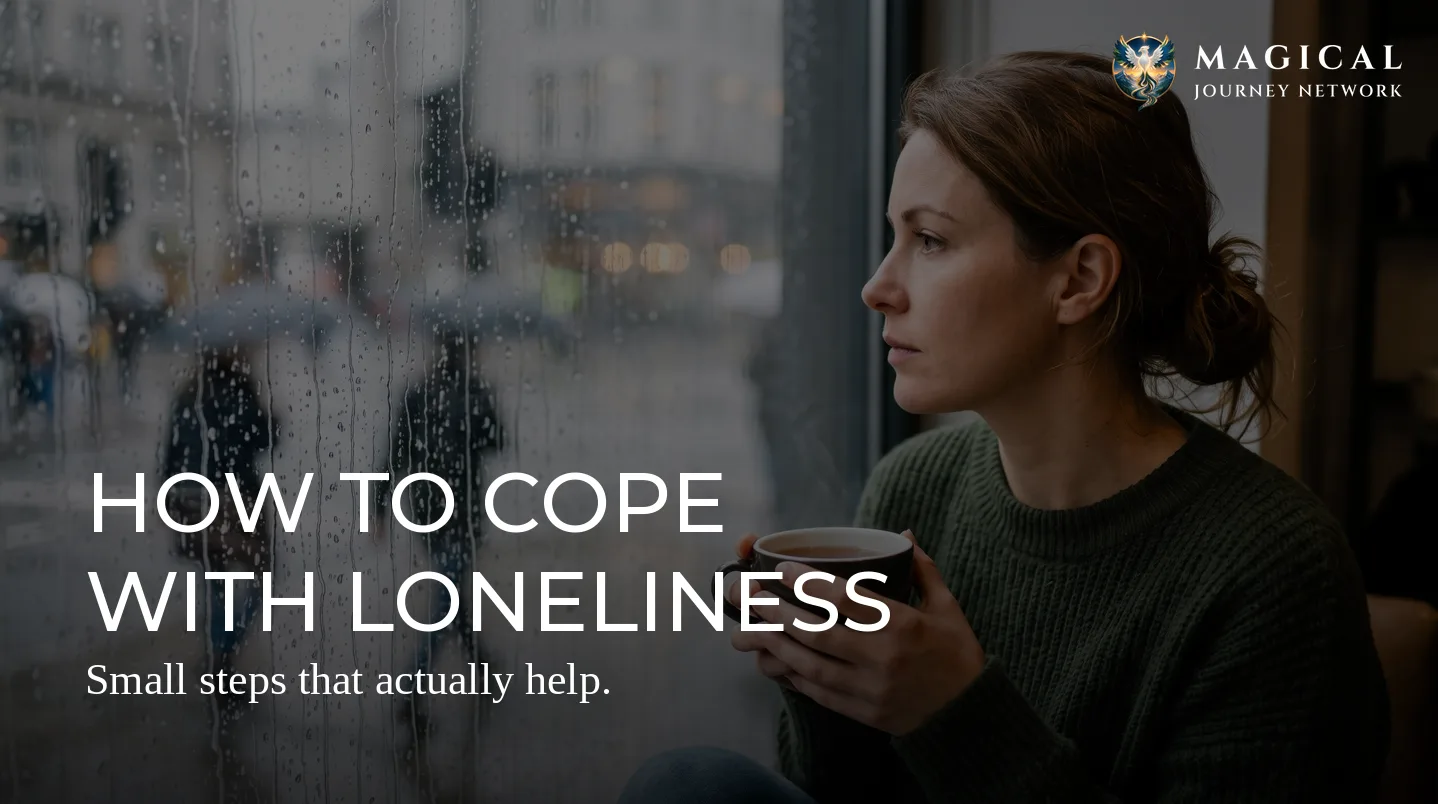
Loneliness can show up in a crowded room, in a busy office, or at the end of a long day when the apartment goes quiet. It can follow a move, a breakup, a new job or a loss. And it is far more common than most people say out loud.
In a 2025 Cigna survey, two out of three Gen Z and millennial adults reported feeling lonely. If you are feeling it right now, you are not strange or broken. You are human, and there are small things that help.
What Loneliness Really Is
Loneliness is the gap between the connection you have and the connection you want. It is not the same as being alone. Some people live alone and feel content. Others are surrounded by people and still feel unseen.

Think of loneliness like hunger. It is a signal, not a flaw. It is your mind telling you that you need more real connection, the same way hunger tells you that you need food.

Why It Can Feel So Heavy
Loneliness tends to feed on itself. When we feel disconnected, we often pull back further, expect rejection, and read neutral moments as signs that nobody cares. That is a normal reaction, and knowing about it helps you notice it and gently push back.
Loneliness is a signal, not a flaw. It is asking you to reach toward people, not away.
Why Loneliness Is So Common Right Now
There are real reasons so many people feel this way. More people work remotely. People move for jobs and live far from family. Many friendships live mostly on screens. And big life changes, like a new city, a new job or the end of a relationship, can quietly cut the ties we used to rely on.
Knowing this will not make loneliness disappear, but it can take away some of the shame. It is not that something is wrong with you. Modern life makes connection harder, so it takes a little more intention to build.
Small Steps You Can Take Today
- Send one message. Text someone you have not talked to in a while: "Thinking of you. How have you been?"
- Say hello to one stranger: the barista, a neighbor, the person next to you in line.
- Get out of the house for an hour, even just to a library or coffee shop. Being around people helps.
- Move your body outside. A walk in daylight lifts mood and often leads to small moments of contact.
- Write down three moments of connection at the end of the day, however small.
Short conversations with strangers lift our mood more than we expect. Our post on the benefits of talking to strangers has easy ways to start.

Build Connection That Lasts
Quick hellos help in the moment. Lasting connection comes from seeing the same people again and again.
- Join something weekly: a class, a team, a volunteer shift or a faith community.
- Turn one acquaintance into a standing plan, like a Sunday walk or a monthly dinner.
- Offer help. Volunteering and helping a neighbor build connection and purpose at the same time.
- Go one question deeper in conversations, and share a little more than you usually would.
Our guide on how to make friends as an adult has more ideas for turning hellos into real friendships.
Notice the Stories You Tell Yourself
When we feel lonely, our minds often fill in the blanks with harsh stories: "Nobody wants to hear from me." "They only invited me to be polite." Try to treat those thoughts as guesses, not facts. Ask yourself what else could be true. Most of the time, people are simply busy, and a friendly message is welcome.
Be Kind to Yourself in the Meantime
Building connection takes time, so it helps to make your own company a little easier. Keep a simple routine, spend time on something you enjoy, and talk to yourself the way you would talk to a friend who felt this way.

When Loneliness Is More Than Loneliness
Sometimes loneliness travels with something heavier. If you feel hopeless most days, have stopped enjoying things you used to love, or have thoughts of hurting yourself, please reach out for professional support. In the US, you can call or text 988, any time, day or night.
Common Questions
- Is it normal to feel lonely even with friends? Yes. Loneliness is about the quality of connection, not the number of people.
- Why do I feel lonelier at night? Quiet hours leave more room for thoughts. A simple evening routine and an early check-in with a friend can help.
- How long does loneliness last? It often eases as you build regular contact with a few people. Small steps add up.
If you are worried about a man in your life, read why so many men feel alone and what actually helps.
Magical Journey Network, Inc. is a nonprofit. If this post helped, you can support our work.
Grab the free 3-Day Reflection Journal below. Its gentle prompts help you notice how you really are and what kind of connection you need most.
No one transforms alone.
Get A 3-Day Reflection Journal free, and join the network for honest stories and simple tools for life's big changes.

Ania is COO and Head of Creative at Magical Journey Network, where she shapes the writing, the website, and the way MJN shows up in the world. A two-time bestselling author, she writes about mentorship, growth, career transitions, and what it takes to change direction without losing yourself.